Is online banking security in uae truly strong enough to protect your money in a world where cyber threats evolve every day? As more residents rely on digital banking for payments, savings, and investments, concerns about fraud, hacking, and unauthorized access continue to rise. People now ask an important question: can convenience and safety really go hand in hand in modern banking?
With mobile apps and digital platforms becoming the primary way to manage finances, online banking security in uae has moved from being a technical topic to a daily concern for individuals and businesses alike. Customers often wonder whether their personal data is fully protected or if simple mistakes—such as using public Wi-Fi or weak passwords—could expose them to serious financial risks.
So how can users stay safe while enjoying the benefits of digital banking? Understanding how online banking security in uae works, what protections banks provide, and what responsibilities fall on customers is the first step toward confident and secure financial management in today’s digital environment.
Online Banking Security in UAE: How the System Protects You
The UAE has built one of the most advanced digital banking ecosystems in the region, supported by strict regulations and modern security frameworks. Banks operating in the country are required to follow strong compliance standards designed to protect customer data, prevent fraud, and ensure financial stability.
At the core of online banking security in uae is multi-layered digital protection. This means that instead of relying on a single security measure, banks use several defensive layers working together. These layers typically include encrypted communication, identity verification, transaction monitoring, and automated fraud detection systems.
Another key factor is centralized regulatory oversight. Financial institutions in the UAE must comply with national cybersecurity policies and banking regulations that enforce accountability. This ensures that banks continuously update their systems to address emerging cyber threats.
Why the UAE Is Considered a Leader in Digital Banking Safety
Several factors contribute to the UAE’s reputation for strong banking security:
Mandatory data encryption standards for all online transactions
Continuous monitoring of suspicious account activity
Advanced customer identity verification systems
Strong cooperation between banks and regulatory authorities
Together, these measures create a secure digital environment that balances innovation with safety.
Understanding Secure Login Systems in UAE Banks
Secure account access is the first line of defense against cybercrime. Most UAE banks have invested heavily in advanced authentication systems to ensure only authorized users can log in.
A secure login dubai framework typically combines something you know (like a password), something you have (such as a registered phone), and something you are (biometric data). This layered approach significantly reduces the risk of unauthorized access.
Common Login Security Features Used by Banks
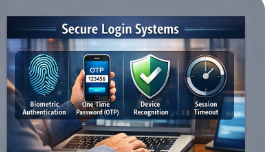
Biometric authentication (fingerprint or facial recognition)
One-time passwords sent to registered devices
Device recognition to block unfamiliar access attempts
Automatic session timeouts after inactivity
These features are designed to protect users even if one layer is compromised.
User Responsibility in Login Security
While banks provide secure systems, users also play a critical role. Simple habits—like avoiding shared devices, logging out after use, and never sharing login credentials—can dramatically reduce risk.
OTP Protection and Its Role in Transaction Safety
OTP protection uae mechanisms are among the most effective tools for preventing unauthorized transactions. A one-time password is a unique code generated for a single login or transaction, making it useless if intercepted.
OTP systems are especially important for high-risk activities such as money transfers, password changes, and account updates. They ensure that even if a hacker gains access to login details, they cannot complete transactions without the additional verification step.
How OTP Systems Reduce Fraud
Codes expire within seconds
Each OTP works for only one transaction
Delivery is limited to verified contact details
Attempts are logged and monitored
These features make OTP-based verification extremely difficult to bypass.
Common Online Banking Threats Faced by UAE Users
Despite strong security systems, cybercriminals continue to develop new tactics. Understanding these threats helps users stay alert and avoid costly mistakes.
Phishing and Social Engineering Attacks
Phishing remains one of the most common methods used by scammers. Fraudsters often impersonate banks or government entities to trick users into revealing sensitive information.
Warning signs include:
Urgent messages requesting immediate action
Spelling or grammar errors
Requests for login details or OTP codes
Malware and Unsecured Networks
Using public Wi-Fi or unprotected devices increases the risk of malware infections. These malicious programs can record keystrokes, steal data, or redirect users to fake banking websites.
Bank Scams Prevention: How UAE Banks Fight Fraud
Bank scams prevention is a shared responsibility between banks and customers. UAE banks employ real-time transaction monitoring systems that analyze user behavior patterns to detect unusual activity.
When suspicious transactions are identified, banks may:
Temporarily freeze the account
Request additional verification
Notify the customer immediately
These proactive measures help stop fraud before serious damage occurs.
Cybersecurity Banking Policies and Regulations in the UAE
Cybersecurity banking standards in the UAE are designed to protect both financial institutions and customers. Banks must regularly test their systems, conduct security audits, and train staff to respond to cyber incidents.
Key Regulatory Focus Areas
Protection of customer data privacy
Secure digital infrastructure
Incident response and recovery plans
Continuous risk assessment
These policies ensure that security evolves alongside technology.
Customer Best Practices for Safe Online Banking
Even the most advanced systems cannot protect users who ignore basic safety practices. Customers should take an active role in securing their accounts.
Essential Safety Tips
Use strong, unique passwords
Enable all available security features
Avoid clicking on suspicious links
Monitor account activity regularly
Developing safe habits is just as important as the technology behind the system.
Advanced Encryption and Data Protection in UAE Online Banking
One of the strongest pillars of online banking security in uae is advanced data encryption technology. Encryption ensures that any data sent between a user’s device and the bank’s servers is transformed into unreadable code that cannot be accessed by unauthorized parties.
Banks in the UAE rely on end-to-end encryption protocols, meaning information is protected both during transmission and while stored in banking systems. This prevents hackers from extracting usable data even if they manage to intercept communications.
How Encryption Protects Customers
Prevents exposure of login credentials
Secures financial transactions and balances
Protects personal identity information
Reduces the risk of large-scale data breaches
This invisible layer of security works continuously in the background, offering protection without affecting user experience.
Real-World Scenarios: How Banking Security Stops Fraud
Understanding security measures becomes easier when viewed through real-world situations. Consider a case where a customer’s login details are compromised. Without additional safeguards, this could lead to immediate financial loss.
However, in the UAE’s banking environment, behavioral monitoring systems detect unusual actions, such as logins from unfamiliar locations or abnormal transaction amounts. These systems trigger alerts and force additional verification before any transaction is approved.
Why Early Detection Matters
Early fraud detection allows banks to:
Block transactions before completion
Contact customers for verification
Prevent repeated unauthorized attempts
This proactive approach minimizes losses and builds trust between banks and customers.
Comparing Online Banking Security Features
Below is a simplified comparison of common security features used by UAE banks and their primary benefits:
| Security Feature | Purpose | Customer Benefit |
|---|---|---|
| Biometric login | Identity verification | Faster, safer access |
| OTP authentication | Transaction confirmation | Reduced fraud risk |
| Encryption | Data protection | Privacy assurance |
| Activity monitoring | Fraud detection | Early threat response |
| Session timeouts | Access control | Prevents misuse |
This layered approach ensures no single point of failure compromises the entire system.
The Role of Artificial Intelligence in Banking Security
Artificial intelligence is playing an increasingly important role in modern fraud prevention systems. AI-driven tools analyze millions of transactions in real time, learning what normal behavior looks like for each customer.
When deviations occur, such as sudden high-value transfers or unusual login patterns, the system reacts instantly. This makes cybersecurity banking efforts faster, smarter, and more adaptive than traditional rule-based systems.
Key Advantages of AI-Based Security
Real-time threat detection
Reduced false alarms
Continuous system learning
Faster response to emerging threats
AI allows banks to stay one step ahead of cybercriminals.
Customer Awareness: The Missing Link in Digital Security
While banks invest heavily in technology, customer awareness remains a critical factor. Many security breaches occur not because systems fail, but because users unknowingly provide sensitive information to scammers.
Educating customers about common fraud tactics significantly strengthens bank scams prevention efforts.
Mistakes Customers Should Avoid
Sharing OTP codes with anyone
Responding to urgent financial messages
Downloading unknown applications
Ignoring security alerts
Awareness transforms customers from vulnerable targets into active defenders of their own finances.
Future Trends in Online Banking Security in UAE
The future of online banking security in uae points toward even stronger and more seamless protection. Banks are exploring passwordless authentication, relying entirely on biometrics and secure devices.
Other innovations include:
Behavioral biometrics (typing and usage patterns)
Blockchain-based transaction verification
Predictive fraud analytics
These advancements aim to enhance security without sacrificing convenience.
How Businesses Benefit from Strong Banking Security
It’s not just individuals who benefit from secure banking systems. Businesses rely on digital banking for payroll, supplier payments, and financial planning. Robust security protects companies from financial disruption and reputational damage.
Strong security systems also encourage foreign investment, as global businesses trust the UAE’s financial infrastructure.
Best Practices for Long-Term Online Banking Safety
Long-term safety depends on consistency. Customers who follow security best practices reduce their risk significantly over time.
Recommended Habits
Update devices and apps regularly
Review bank statements frequently
Enable transaction notifications
Report suspicious activity immediately
Security is not a one-time action—it’s an ongoing process.

Frequently Asked Questions (FAQ)
Q1: Is online banking safe to use in the UAE?
Yes, online banking security in uae is supported by strict regulations, advanced technology, and continuous monitoring, making it one of the safest digital banking environments globally.
Q2: Can hackers bypass OTP systems?
OTP systems are highly secure when used correctly. Most breaches occur due to user error, such as sharing codes, rather than technical failure.
Q3: What should I do if I suspect fraud?
Immediately contact your bank, change your credentials, and monitor your account activity closely.
Q4: Are mobile banking apps as secure as online banking websites?
Yes, mobile apps often include additional security layers such as biometric authentication and device recognition.
Q5: Will online banking become safer in the future?
Absolutely. Continuous innovation in encryption, AI, and authentication technologies will further strengthen digital banking security.
Conclusion
Online banking has transformed the way people manage money, and online banking security in uae plays a vital role in ensuring this transformation remains safe and sustainable. Through advanced technology, strong regulations, and informed users, the UAE has created a digital banking ecosystem built on trust and resilience.
By understanding how security systems work and adopting smart financial habits, customers can confidently embrace digital banking while protecting what matters most—their financial future.