Saudi Arabia is entering a new era of growth and transformation, and education stands at the core of this national shift. As the Kingdom prepares for a rapidly changing global landscape, the government has placed strong emphasis on reshaping the learning ecosystem to meet future demands. This shift is driven by the ambitious framework known as Vision 2030 on education, which aims to modernize learning, strengthen human capital, and elevate academic performance across all levels.
The initiative seeks to build an education system that prepares students not only for today’s workforce but also for the emerging industries of tomorrow. With an increased focus on innovation, digital learning, and global competitiveness, the Kingdom is creating a more flexible and future-ready academic environment. These goals reflect the broader national development agenda outlined in Vision 2030’s challenges and results, showing how education reform fits within Saudi Arabia’s overall transformation.
Education in Vision 2030: How Will Saudi Arabia Reshape the Future of Education?
Education Goals 2030 aim to increase national testing performance, expand bilingual education, boost STEM participation, and integrate experiential learning. Learning outcomes are now measured using global benchmarks to ensure that Saudi students are competitive internationally.
1.Developing Skills for the Future Workforce
Future jobs require creativity, critical thinking, and digital fluency. Vision 2030 upgrades school programs to include:
Robotics and programming
Artificial Intelligence foundations
Entrepreneurship
Communication and teamwork
Advanced scientific thinking
These align with the national upskilling vision described in Saudi Vision 2030 focuses on infrastructure and skills.
2. Aligning Schools and Universities With Global Standards
Saudi Arabia is partnering with accredited institutions worldwide to modernize curricula, assessment systems, and teaching practices. Global exchange programs and international certifications ensure that learning remains world-class.
Why Education Is Central to Saudi Arabia’s Transformation
The Kingdom recognizes that no transformation is possible without skilled, creative, and adaptable learners. As such:
Schools are being redesigned with modern technologies
Universities are forming global partnerships
Teachers are receiving advanced training
Students are gaining access to new pathways in STEM, arts, business, and technical fields
This approach ensures that Saudi youth become active contributors to the knowledge economy.
Key Pillars of Education Development in 2030
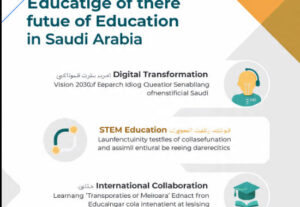
- Digital Transformation and Smart Learning
Saudi Arabia became one of the most digitally advanced education systems in the Middle East. Platforms like Madrasati, iEN, and Future Gate support millions of students. Smart classrooms are now equipped with interactive screens, cloud tools, and AI-learning assistants.
- Teacher Development and Professional Excellence
Teachers receive continuous professional development through workshops, e-learning, international training programs, and performance-based incentives. These efforts strengthen teacher quality and educational outcomes.
- Curriculum Modernization and Competency-Based Learning
Memorization-based learning is being replaced by competency-based systems that promote real-world skills. Subjects like financial literacy, innovation, digital citizenship, and entrepreneurship are now part of the curriculum.
How Reforms Are Reshaping the Sector
- Investment in Educational Infrastructure
Saudi Arabia continues to build smart universities, research centers, digital libraries, and innovation hubs. These investments support modern scientific research essential for national growth.
- Strengthening Research, Innovation, and R&D
Research output has significantly increased. Universities now collaborate with global research institutes to develop practical solutions in health, agriculture, energy, and sustainability.
- Enhancing Vocational and Technical Training (TVET)
TVET programs support the labor market by preparing students for technical and industrial fields. This includes training centers in tourism, aviation, cybersecurity, and engineering.
Innovation, Creativity, and Cultural Transformation
Creativity and arts education have been expanded to encourage innovation and problem-solving skills. This reflects the broader cultural development highlighted in Vision 2030 in art and innovation.
Challenges Facing Education Development in 2030
Addressing Skill Gaps and Labor Market Needs
One challenge is aligning university graduates with market requirements. Vision 2030 responds by creating new majors, redesigning training programs, and collaborating directly with industries.
Ensuring Equal Access to Quality Education
Saudi Arabia is working to reduce regional disparities by investing in digital access and offering subsidized educational services.
Education Before and After Vision 2030
| Aspect | Before Vision 2030 | After Vision 2030 |
|---|---|---|
| Learning Style | Memorization-driven | Competency & inquiry-based |
| Technology Use | Limited | Smart, AI-powered classrooms |
| Curriculum | Traditional subjects | Future skills, STEM, innovation |
| Teacher Training | Periodic | Continuous, global-standard |
| Student Skills | Low job readiness | High digital & future skills |
| Research Output | Limited | Strong R&D culture |
| Inclusivity | Basic support | Full inclusion framework |
| Global Partnerships | Minimal | Extensive international collaboration |

FAQs
1. What is the main purpose of Vision 2030 on education?
Its goal is to modernize the education system, enhance student outcomes, adopt digital learning, and prepare Saudi youth for the future economy.
2. How will Saudi schools look by 2030?
Schools will incorporate smart technologies, modern laboratories, digital platforms, and competency-based curricula.
3. How does Vision 2030 support inclusive education?
It provides specialized programs, accessibility tools, and advanced support for learners with disabilities.
4. What new skills are emphasized under Education Goals 2030?
They include AI literacy, creativity, communication, robotics, entrepreneurship, and advanced STEM fields.
5. What role does technology play in education reform?
Technology supports digital classrooms, personalized learning, virtual labs, and AI-driven student assessment tools.
Conclusion
Saudi Arabia’s Vision 2030 on education is transforming the learning landscape through innovation, digital transformation, skilled teachers, and modern curricula. By 2030, the Kingdom aims to build one of the most dynamic education systems in the world—empowering students to become innovators, creators, and leaders in the global economy.